
I have often wondered about the origin of the notion of “vacation” as a time away from home and daily responsibilities in order to travel, relax and restore oneself. Little did I know until recently that my father used to take us to the very site that inspired the birth of that notion.
From my study of Latin (four years in high school, two years in college: “veni, vidi, vici” – I still remember that!), I knew that “vacation” was derived from the Latin “vacare” (to be empty, free from). But it wasn’t a derivative of that verb which classic Latin writers such as Cicero and Horace used when describing traveling for rest and relaxation. Instead, they used words meaning “leisure” or “retreat.”
It turns out that the term “vacation” as we now use it, especially in connection with summertime, is thanks to a Congregationalist minister from Boston. In the early 1860’s William H.H. Murray while pastor at First Congregational Church in Meriden, Conn, decided to travel one summer into the Adirondacks. What until then had been seen as activities for survival (hunting, hiking, fishing), Murray experienced as a way to relax from the press and pace of the industrial world.
Murray wrote a series of newspaper articles about his experiences, urging others to “vacate” the stress of urban life for a period of restoration in nature. In 1869 he published his pieces as a book, titled Adventures in the Wilderness; or, Camp-Life in the Adirondacks.
By the time of his book’s publication, Murray was pastor at the Park Street Church in Boston. He continued his camping, hiking and fishing, much to the consternation of members of his congregation, who thought such activities inappropriate for a clergyman. As a result of that opposition, Murray resigned from the church. He never held a pastor’s position again. However, his promotion of a “vacation” caught on, as the country shifted from agriculture to industry, from rural to urban, from work tied to the land and livestock to work tied to a factory or office time clock.
One of the places most revered by Murray was Saranac Lake. It was to Saranac Lake that my father used to take us during the summer. We would rent a boat house on the lake, where we would fish, canoe and walk the trails. We did non-city things; wore non-city clothes; and moved at a non-city pace.
However, we were there not directly because of Pastor Murray. We were there because as a young man Dad had spent four years at Trudeau Sanitarium at Saranac Lake recovering from tuberculosis.
He had fallen in love with the peace and restoration his experience of Saranac Lake had brought him. In addition to his physical healing, his time there also allowed him to develop a side of himself that the demands of professional life as a lawyer often did not allow space for. He sketched and modeled with clay, both of which he continued throughout the rest of his life. His various and multiple forms of vacation there – from ill health, from the stress of work – saved his life and opened him to new possibilities.
Vacated space/time is central to the Hasidic sage Rabbi Nachman’s view about what nurtures a healthy body, psyche, spirit and soul. He contended with what he viewed as suffocating tendencies within religion: joyless, rote observance of mitzvot; over-intellectualization; the pursuit of power by some religious authorities. He also struggled with his own chronic depression, with its message of unworthiness and limited possibilities.
He pushed back against the constraining press of those forces by emphasizing the role of joy, heartfelt prayer in the outdoors and, most of all, exploration of the far reaches of one’s creative imagination. Rabbi Nachman innovated on the kabbalistic notion that the world came into existence as a result of God withdrawing Godself from part of reality – by vacating and creating a void – allowing finite reality, human beings, to fill it through their own initiatives.
Rabbi Nachman’s concern is less about cosmology and God than about psychology, spirituality and human growth. He turned the kabbalistic mythology about the creation of the universe into a model about human development. The void is that dimension within us where we fear to go, thinking it is only a dark abyss – empty of the divine – containing our fears and negative urges. Enter it, he advises, and transform what is there for good. The void is not the absence of life. It is the medium within which life grows.
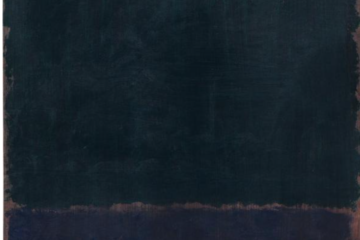
Yves Klein was a 20th century French artist who achieved renown as much for his un-making of art as for his making of it. He created his own color, an ultramarine which became known as International Klein Blue. He used this to depict a vision he had at the age of nineteen. While looking up at the sky, he had experienced infinite, immaterial space surrounding the universe. The painting he produced, Blue Monochrome, contains no trace of line or imagery. While many rushed to fill that absence with various explanatory symbolisms, Klein said there was nothing there at all, only “the void.”
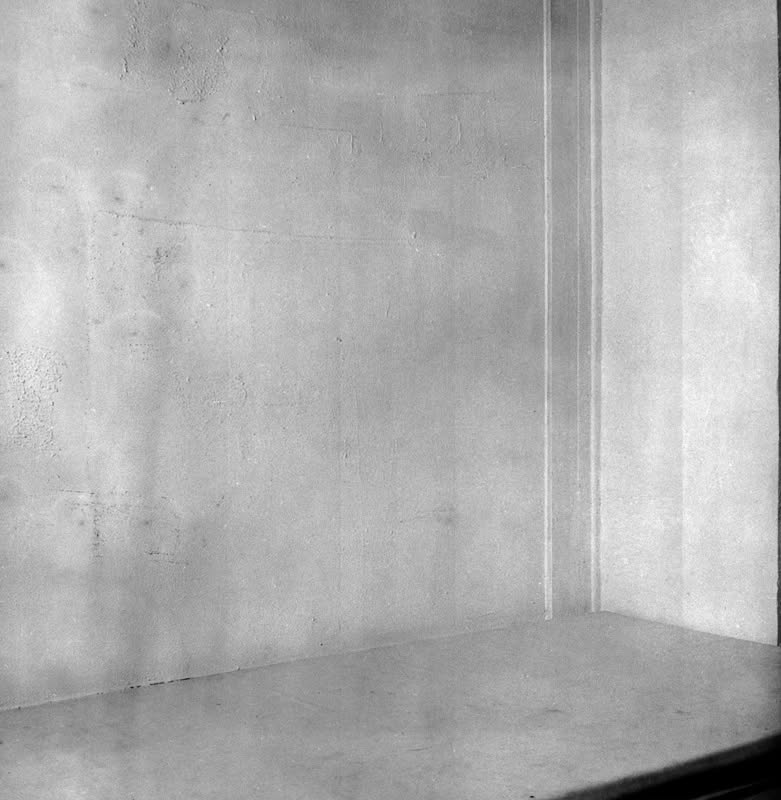
In 1958 Klein turned his notion of the void into an entire event. He removed everything from the Iris Clert Gallery in Paris and labeled the exhibit/event Le Vide (The Void). Pictured here is a photograph of a partial view of Le Vide at the Iris Clert Gallery. Klein believed that in emptying the gallery, “the invisible would become effective through the perceptible.”
Thousands flocked to the gallery, though few ventured to go inside The Void. Among those who gathered was Albert Camus, who signed the guest book with the phrase: “Avec le vide, les pleins pouvoirs” (With the void, full powers).
No trip to the Adirondacks is scheduled for this summer. I’m not planning on painting, much less creating a new pigment. No exhibit is in the works. But I am looking forward to pushing back against the press of things a bit. And to being grateful to Rabbi Nachman for his spiritually healing courage and to Yves Klein for his profoundly pranksterish approach to art. And to Dad for being an exemplar of continually expanding what it is possible to become.
Love,
Rabbi Moskowitz
A partial view of Le Vide by Yves Klein