
In each of us there is a hidden wholeness. To discover it is to free ourselves from self-created insatiable cravings. It is to become whole and truly powerful.
View the study sheet here. Recording here.
The sovereign sweeps into his chamber of power and declares his intent to have a second coronation. Having already been anointed, however, no such ceremony is actually required. His primary reason for wanting such a ritual is to make his noble supporters swear allegiance to him once again. Loyalty is paramount. Thinking such pomposity to be self-indulgent absurdity, one of the nobles proclaims: “To gild refined gold, to paint the lily…is wasteful and ridiculous excess.”
That line, spoken by the Earl of Salisbury in Shakespeare’s King John, provided Mark Twain with the title for his book about greed and political corruption in late 19th century America, The Gilded Age: A Tale of Today. Published in 1873, it so anticipated the political, industrial and societal aspects of American life, that historians in the 1920s adopted Twain’s title to describe the period from the late 1870s to the late 1890s.
That era in American history was an age of both great enthusiasm and intense anxiety. The great enthusiasm was inspired by a booming industrial economy. New technologies entered American life at a dizzying rate: the production of steel, the invention of the electric light, the development of the telephone, and the expansion of railroads. But, as Twain bitingly portrayed in his novel, beneath all the gold and glitter of that economic expansion were social and political trends causing ripples of anxiety to spread across the country.
Within just a few decades a new class of super rich families had consolidated a level of wealth never before seen in the United States: industrialists like John D. Rockefeller and Andrew Carnegie; financiers like J. P. Morgan and Jay Gould. Even more striking than the amount of great wealth such families possessed was how they spent it: palatial mansions, grandly lavish costume balls, legions of servants. Their unapologetic display of wealth subverted long-standing American values of modesty and virtue that had distinguished how wealthy Americans lived compared to ostentatious European aristocrats.
These super rich poured enormous sums of money into politics to promote and protect their interests. Republican Party power broker Mark Hanna, himself a millionaire, remarked: “There are two things that are important in politics. The first is money, and I can’t remember what the second one is.” A political cartoon in 1889 depicted giant, rich, fat men representing various trusts and monopolies standing behind much smaller figures representing United States senators. At the local level it was the age of Tammany Hall and Boss Tweed. Corruption was the political currency, regardless of party affiliation.
To control their wealth, the robber barons of the Gilded Age used both private security and government armed forces to quell labor uprisings. They advanced voter-suppression measures such as poll taxes and literacy tests. Violence and intimidation were used to keep Blacks from voting.
Wealth grew enormously and was shamelessly displayed. Inequality between the rich and the poor exploded. Anti-immigrant sentiment raged. The integrity of political institutions lay shredded on the floor of Congress and in the chambers of city halls across the country.
The Gilded Age: A Tale of Today is once again a tale today. The Gilded Age is a historical drama television series now in its third season. Created and written by Julian Fellowes for HBO, it is set in New York City, during the Gilded Age’s boom years of the 1880s. And it’s all about the money.
New money robber barons appear almost as an invading force, seeking to socially displace older, more established wealthy families. The conflict between them is waged in grand mansions awash in gold-gilded furnishings, where the warriors are costumed in sumptuous gowns and suits. No expenditure is too unreasonable, no display of wealth too ostentatious, no business strategy is too ruthless in the pursuit of economic and social dominance. The hunger for wealth and power insatiable. There is no too much. And there is no enough.
Parshat Beha’alotecha (“when you set up”) begins with Moses receiving instructions about how to mount lamps in the Mishkan’s lampstand…a work of hammered gold. By the middle of the portion we read a report of the Israelites complaining. The Hebrew verb used to describe their expression of discontent is in a rarely used reflexive form. The grammar hints that there is no objective basis behind their complaint. It is something the people have stirred up in themselves.
Quickly the text identifies the complainers as “riffraff.” They protest the lack of food: “If only we had meat to eat! We remember the fish we used to eat free in Egypt, the cucumbers, the melons, the leeks, the onions, the garlic. Now our gullets are shriveled. There is nothing at all!”
The Hebrew for the word translated as “riffraff” is built from the Hebrew verb “to gather,” from which are also derived the nouns “harvest” and “storehouse.” These are people who have everything they need. But for them…it is not enough.
They are described as having a “gluttonous craving,” a term constructed from the Hebrew verb “to desire.” In its reflexive form, the verb expresses a sense of recklessly lusting after something. It is used in Proverbs to describe someone who “strays from the path of prudence and will rest in the company of ghosts.” “Lazy” and “refusing to work,” such a person develops cravings that are fatal to his spiritual well-being: “All day long he is seized with craving while the righteous person gives with out stint.”
The Hasidic sage Mordechai Yosef Leiner, known as the Ishbitzer Rebbe, viewed the midbar, the environment within which the events of the book of Numbers (Bamidbar) take place, as an inner condition. It is the site where each human battles with their libidinal and aggressive forces.
This wilderness tests the spiritual aspirations of even the greatest people. It is in this wilderness, this wild place, that Moses, Aaron and Miriam will struggle with their own dark forces. The midbar is a dimension that must be crossed, where aggressive elements need to be confronted and worked through so that the promise of peace, of wholeness restored can be fulfilled.
In his poem “Hagia Sophia,” the American Trappist monk Thomas Merton celebrated divine Wisdom as the feminine manifestation of God, which dwells both in creation and in our inner selves. He wrote: “There is in all things…a hidden wholeness. There is in all things an inexhaustible sweetness and purity, a silence that is a foundation of action and joy. It rises up in gentleness and flows out to me from the unseen roots of all created being.”
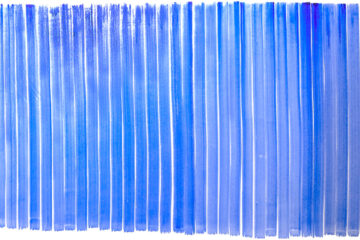
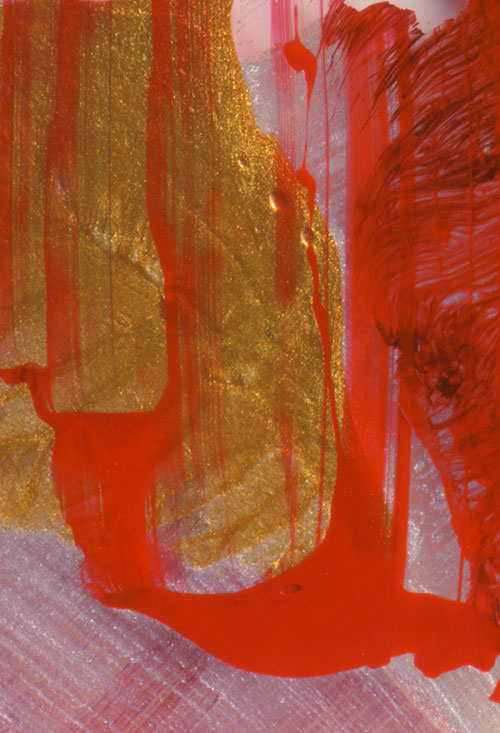
Jan Richardson is an ordained minister in The United Methodist Church. She is also an artist. Pictured here is her work “In Every Chamber of the Heart.” Here the gold that lies at the heart’s center is not the false patina of the Gilded Age. It represents the clarity that we can “live in a way that recognizes that, broken though we may be, God sees us complete and is about the work of helping us live into that completeness, not just for ourselves but for and with one another.”
She cites Psalm 111 and its powerful call to overcome our destructive urges and embrace the “inexhaustible sweetness and purity” Merton described as dwelling within us: “Hallelujah! I shall praise Adonai with all my heart” (Psalm 111:1).
The Hebrew in our portion attests to the “hidden wholeness” that rests within those crossing the midbar. The Israelites are blessed with everything they need, even as they are subject to reckless, self-generated cravings. Their struggle, and ours, is to render up “gluttonous cravings” and discover the sustaining nurturance that has always been there…our hidden wholeness.
Join us at 7:00 p.m. (PT) on Thursday June 12 as we explore a hidden wholeness.
In Every Chamber of the Heart by Jan Richardson